1

Country: USA | Funding: $804M
Redwire is a key mission enabler with products relevant to almost every space mission, including: power generation, antennas, deployable solutions, star trackers, and camera systems. It is building next generation spacecraft with key capabilities such as maneuverability, AI, and resiliency. Redwire’s advanced optical imaging and sun sensor technology launched onboard the Orion spacecraft as part of NASA’s Artemis II mission, the first crewed mission for the Artemis program. Redwire is also a global leader in microgravity research and development with decades of flight heritage and hundreds of experiments flown focused on transformational improvements to drug development and human health issues.
Redwire is a key mission enabler with products relevant to almost every space mission, including: power generation, antennas, deployable solutions, star trackers, and camera systems. It is building next generation spacecraft with key capabilities such as maneuverability, AI, and resiliency. Redwire’s advanced optical imaging and sun sensor technology launched onboard the Orion spacecraft as part of NASA’s Artemis II mission, the first crewed mission for the Artemis program. Redwire is also a global leader in microgravity research and development with decades of flight heritage and hundreds of experiments flown focused on transformational improvements to drug development and human health issues.
2

Country: USA | Funding: $796.6M
Firefly Aerospace provides launch vehicles, spacecraft, and in-space services for small payloads. Firefly’s on-orbit services include deorbiting services to help minimize space debris. Firefly’s lunar lander is flying annual missions to the Moon with payload services customized to the technology and exploration goals of each customer.
Firefly Aerospace provides launch vehicles, spacecraft, and in-space services for small payloads. Firefly’s on-orbit services include deorbiting services to help minimize space debris. Firefly’s lunar lander is flying annual missions to the Moon with payload services customized to the technology and exploration goals of each customer.
3

Country: USA | Funding: $249.6M
Astrobotic is building robotics technologies for lunar mission - from surface and subsurface robotics platforms, to precision landing and hazard detection systems. Its main products inlude lunar landers that can carry around 625 kg of payload to the lunar surface, moon rovers designed to provide affordable mobility for scientific instruments and other payloads to operate on the surface of the Moon, small cube-rovers, designed to accommodate diverse lunar payloads with distinct mission profiles, like lunar regolith digging or water ice harvesting. The company also plans commercial power service for the lunar surface. It will enable space agencies, companies, and nonprofit systems to survive the lunar night and operate indefinitely on the Moon.
Astrobotic is building robotics technologies for lunar mission - from surface and subsurface robotics platforms, to precision landing and hazard detection systems. Its main products inlude lunar landers that can carry around 625 kg of payload to the lunar surface, moon rovers designed to provide affordable mobility for scientific instruments and other payloads to operate on the surface of the Moon, small cube-rovers, designed to accommodate diverse lunar payloads with distinct mission profiles, like lunar regolith digging or water ice harvesting. The company also plans commercial power service for the lunar surface. It will enable space agencies, companies, and nonprofit systems to survive the lunar night and operate indefinitely on the Moon.
4

Country: Canada | Funding: $183M
MDA is an international space mission partner and robotics, satellite systems, and geointelligence pioneer. MDA is developing the Canadarm3, an iconic, next-generation AI-enabled robotic system. Also MDA supports humanity’s long-term return to the lunar surface,
MDA is an international space mission partner and robotics, satellite systems, and geointelligence pioneer. MDA is developing the Canadarm3, an iconic, next-generation AI-enabled robotic system. Also MDA supports humanity’s long-term return to the lunar surface,
5

Country: Japan | Funding: $174.8M
iSpace is a lunar mission and exploration company. Its goal is to expand human presence in space. According to the company, the moon's water resources represent untapped potential for developing a space economy: water can be broken down into hydrogen and oxygen to produce fuel, accelerating the pace of space exploration. Therefore, the company is mapping lunar water resources. The company's management predicts that by 2040, 1,000 people will live on the moon and iSpace will provide the infrastructure for lunar missions (lander, rovers, etc). iSpace's first lunar mission was launched in 2022 to demonstrate a soft landing on the moon. The second, in 2024, was intended to deliver a small rover. Both missions crashed on the moon but provided the company with valuable data and experience.
iSpace is a lunar mission and exploration company. Its goal is to expand human presence in space. According to the company, the moon's water resources represent untapped potential for developing a space economy: water can be broken down into hydrogen and oxygen to produce fuel, accelerating the pace of space exploration. Therefore, the company is mapping lunar water resources. The company's management predicts that by 2040, 1,000 people will live on the moon and iSpace will provide the infrastructure for lunar missions (lander, rovers, etc). iSpace's first lunar mission was launched in 2022 to demonstrate a soft landing on the moon. The second, in 2024, was intended to deliver a small rover. Both missions crashed on the moon but provided the company with valuable data and experience.
6

Country: USA | Funding: $144.5M
Intuitive Machines offers engineering solutions at the unimagined intersections between energy, medicine, and aerospace. In particular it's build Earth-Moon communications infrastructure for NASA.
Intuitive Machines offers engineering solutions at the unimagined intersections between energy, medicine, and aerospace. In particular it's build Earth-Moon communications infrastructure for NASA.
7

Country: Singapore | Funding: $100M
Qosmosys is committed to developing lunar lander tech. The company aims to send its ZeusX spacecraft to the moon
Qosmosys is committed to developing lunar lander tech. The company aims to send its ZeusX spacecraft to the moon
8

Country: USA | Funding: $65.5M
Moon Express develops a robotic spacecraft for low cost missions beyond the Earth, including the Moon, asteroids, and Mars.
Moon Express develops a robotic spacecraft for low cost missions beyond the Earth, including the Moon, asteroids, and Mars.
9
Country: USA | Funding: $53.7M
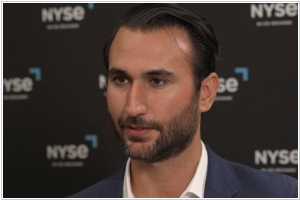
Lunar Outpost is building moon rovers for NASA's Artemis program. The company's first, larger rover, Eagle, is designed to transport astronauts, while the second, Pegasus, is closer to the more compact MAPP-class models: autonomous, modular, and designed for tasks requiring no human intervention. The core idea behind the Lunar Outpost project is that the same wide range of autonomy, mobility, and regolith processing systems that can transport scientific payloads can later assist in preparing landing sites, hosting equipment, maintaining power systems, and servicing equipment between manned visits.
Lunar Outpost is building moon rovers for NASA's Artemis program. The company's first, larger rover, Eagle, is designed to transport astronauts, while the second, Pegasus, is closer to the more compact MAPP-class models: autonomous, modular, and designed for tasks requiring no human intervention. The core idea behind the Lunar Outpost project is that the same wide range of autonomy, mobility, and regolith processing systems that can transport scientific payloads can later assist in preparing landing sites, hosting equipment, maintaining power systems, and servicing equipment between manned visits.
10

Country: USA | Funding: $23.6M
Interlune is a lunar resource startup that provides resources for a clean and sustainable economy on Earth and in space.
Interlune is a lunar resource startup that provides resources for a clean and sustainable economy on Earth and in space.