2

Country: Switzerland | Funding: CHF2.3M
DPhi Space is a startup that specializes in shared satellites for hosted payloads to simplify access to space - a better alternative to cubesats.
DPhi Space is a startup that specializes in shared satellites for hosted payloads to simplify access to space - a better alternative to cubesats.
3

Country: Japan | Funding: ¥36.7B
Interstellar Technologies is developing Zero - small satellite launch vehicle. It is a two-stage rocket designed to provide space transportation services exclusively for small satellites, capable of launching payloads of up to 1,000 kg into low-Earth orbit (LEO). It is expected to be the world's first privately developed rocket to use liquefied biomethane (LBM) as propellant. LBM is produced from biogas derived from local livestock manure and launch costs are expected to be under 800 million yen once mass production begins. The company is also developing the DECA heavy lift vehicle, tailored to meet the demands of the 2030s and its own satellites, and plans to provide high-speed, high-capacity broadband services capable of connecting directly to smartphones, vehicles, and other devices.
Interstellar Technologies is developing Zero - small satellite launch vehicle. It is a two-stage rocket designed to provide space transportation services exclusively for small satellites, capable of launching payloads of up to 1,000 kg into low-Earth orbit (LEO). It is expected to be the world's first privately developed rocket to use liquefied biomethane (LBM) as propellant. LBM is produced from biogas derived from local livestock manure and launch costs are expected to be under 800 million yen once mass production begins. The company is also developing the DECA heavy lift vehicle, tailored to meet the demands of the 2030s and its own satellites, and plans to provide high-speed, high-capacity broadband services capable of connecting directly to smartphones, vehicles, and other devices.
4

Country: USA | Funding: $425.5M
K2 Space specializes in building large satellites that serve as platforms for multiple third-party modules. These satellites became possible with the advent of large launch vehicles like the Falcon 9. Their advantage is high reliability and lower launch/servicing costs for each individual module. This is important for commercial, scientific and defense applications. The company's first satellite, K2 Mega (scheduled for launch in 2026), can carry a payload of up to one ton. It' designed for multi-orbit operations, protected from the harshest conditions of the solar system and is engineered with redundancy and reliability techniques historically reserved for crewed spacecraft like Dragon and the Space Shuttle. Its $15 million cost was achieved through the development of new systems, such as power supply, attitude control, thermal management.
K2 Space specializes in building large satellites that serve as platforms for multiple third-party modules. These satellites became possible with the advent of large launch vehicles like the Falcon 9. Their advantage is high reliability and lower launch/servicing costs for each individual module. This is important for commercial, scientific and defense applications. The company's first satellite, K2 Mega (scheduled for launch in 2026), can carry a payload of up to one ton. It' designed for multi-orbit operations, protected from the harshest conditions of the solar system and is engineered with redundancy and reliability techniques historically reserved for crewed spacecraft like Dragon and the Space Shuttle. Its $15 million cost was achieved through the development of new systems, such as power supply, attitude control, thermal management.
5
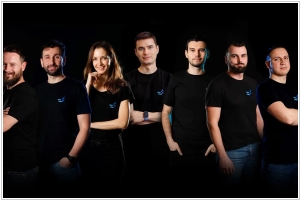
Country: Bulgaria | Funding: $77.7M
EnduroSat designs and engineers spacecraft for business applications and space exploration missions.
EnduroSat designs and engineers spacecraft for business applications and space exploration missions.
6

Country: USA | Funding: $11.8B
SpaceX is Elon Musk's leading space company, having achieved numerous advances in rocket propulsion, reusable launch vehicles, human spaceflight and satellite constellation technologies. It's the dominant global launch provider, surpassing all others in launch frequency. Its Falcon rockets launch 1-3 times per week. The company operates its own Starlink satellite constellation, which provides satellite internet worldwide. SpaceX also builds Dragon capsules for delivering human missions to the space station. It's building Starship, the largest launch vehicle in history, which aims to fully realize the company's vision of a fully reusable, cost-effective and adaptable launch vehicle. SpaceX is also developing its own spacesuit and astronaut as part of its Polaris program and human lander for lunar missions as part of the Artemis program.
SpaceX is Elon Musk's leading space company, having achieved numerous advances in rocket propulsion, reusable launch vehicles, human spaceflight and satellite constellation technologies. It's the dominant global launch provider, surpassing all others in launch frequency. Its Falcon rockets launch 1-3 times per week. The company operates its own Starlink satellite constellation, which provides satellite internet worldwide. SpaceX also builds Dragon capsules for delivering human missions to the space station. It's building Starship, the largest launch vehicle in history, which aims to fully realize the company's vision of a fully reusable, cost-effective and adaptable launch vehicle. SpaceX is also developing its own spacesuit and astronaut as part of its Polaris program and human lander for lunar missions as part of the Artemis program.
7

Country: UK | Funding: $4.7B
OneWeb is building a space-based communications network that delivers high-speed, low-latency internet access.
OneWeb is building a space-based communications network that delivers high-speed, low-latency internet access.
8

Country: UK | Funding: $1.8B
Inmarsat is a mobile satellite communication service provider that aims to power global connectivity services. Acquired by Viasat
Inmarsat is a mobile satellite communication service provider that aims to power global connectivity services. Acquired by Viasat
9

Country: USA | Funding: $753.5M
Astranis is a space startup that builds small and low-cost telecommunications satellites to provide internet access in remote regions.
Astranis is a space startup that builds small and low-cost telecommunications satellites to provide internet access in remote regions.
10

Country: USA | Funding: $652M
Globalstar is a satellite network operator that provides widely-used handheld satellite phone service, offering both voice and data services from virtually anywhere.
Globalstar is a satellite network operator that provides widely-used handheld satellite phone service, offering both voice and data services from virtually anywhere.